

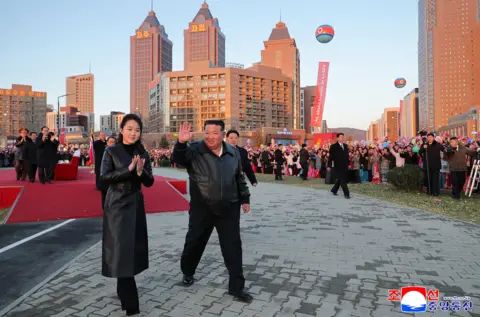
While warnings towards Seoul and vows to develop the nuclear weapons programme, a major uncertainty persisted at the latest key meeting: could the supreme leader's teenage daughter be anointed as the successor?
Although definitive announcement did not materialise at the event, it has ignited a widespread debate about the young girl's viability as the prospective ruler of the 25m-strong state, a government only ever governed by the Kim family bloodline.
Heightened Presence and Analysis
The girl has become more visible in official broadcasts with her father. Nonetheless, much about her is still shrouded in mystery. Pyongyang has consistently refused to formally published her name or stated her date of birth.
Her existence was originally revealed abroad in 2013. Since then, she is generally believed to be 13 years old, in part on intelligence estimates.
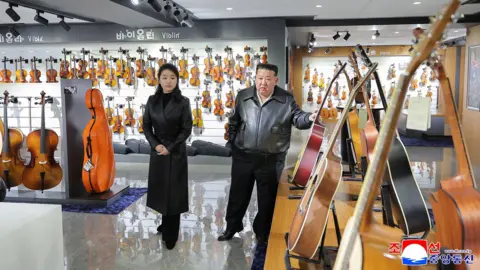
Signs of Heir Apparent
Observers note several key clues. Her regular TV spots—frequently positioned in the shot—and the use of honorific titles traditionally reserved for the ruler are seen as clear indicators.
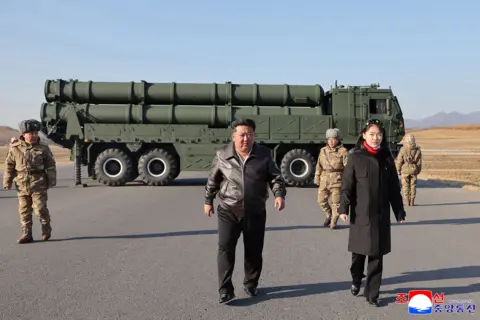
Additionally, her close association with the military is viewed another crucial element. She has inspected soldiers and missiles together with her father. Multiple times, top commanders have been photographed bending near her to whisper at armed forces displays.
"Regime propaganda is utilizing language reserved for the leader. It highlights her own cult of personality," states one prominent commentator.
Such martial familiarization is considered vital, as supreme power in North Korea lies with dominance over the army. To be a legitimate future leader, she must be seen as a capable figurehead.
Controversy Over Gender and Custom
However, a significant counter-argument is raised. Some former officials argue that North Korea's inherently traditional culture presents an formidable barrier for a woman leader.
It is noted that women at every tier find it hard for fair status. Women officials in high roles are extremely uncommon. Everyday superstitions also reflect these attitudes.
"When it happens, they finish the ride then go to the back of their car and expectorate three times to dispel the bad luck," states a one-time North Korean official.
Evolving Social Realities
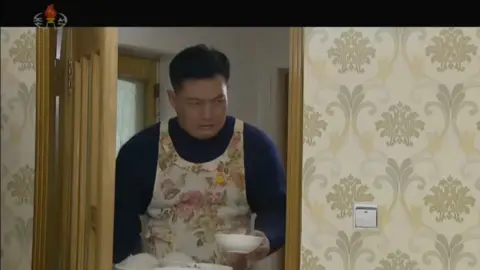
On the other hand, other observers argue that the role of females in North Korea has transformed significantly since the 1990s.
In that period, as the official sector weakened, females often became the primary breadwinners, pursuing black market commerce. This has apparently led to a perceptible transformation in societal dynamics.
One expert who has spoken to many defectors argues that it is now no longer uncommon to see women in administrative roles within the country.
"It is wrong to think of North Korea with Western perspective. We must consider them as the royal court," says the researcher. "What person would have the audacity to defy a person of Kim lineage who is taking the throne?"
Political Calculations
Latest party appointments are also being watched. The promotion of Kim Yo Jong, the leader's powerful sibling, to a senior ideological post is seen by some as a move to install a guardian for the potential heir.
In the end, analysts are in disagreement. Some interpret the spotlight on Ju Ae as a deliberate move to soften the leader's image and signal another family transfer of power. Others insist the evidence of her training are too clear to overlook.
Either way, the debate in and of itself may serve a goal for the Pyongyang, ensuring international attention firmly locked on the secretive Kim family rule.


